Harolld & Caroll
.png)
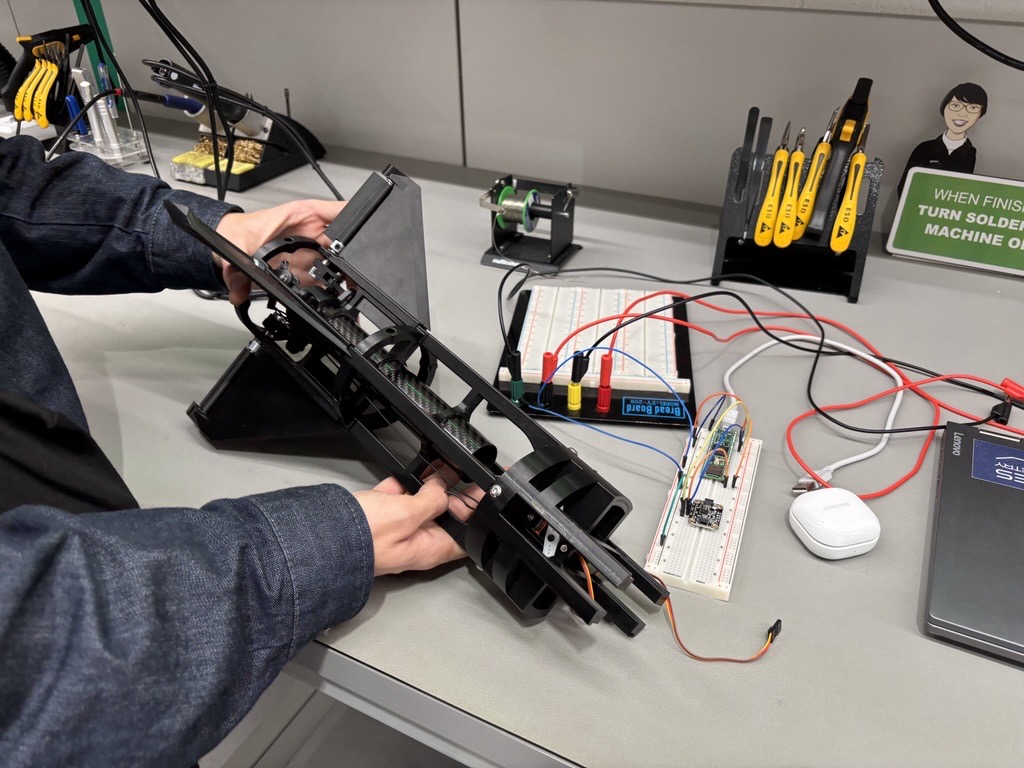
Harolld is an L1 rocket testbed for developing an aerodynamic roll control system, designed by myself and a peer. The purpose of the project is to encompass all the disciplines involved in mechatronics design, specifically tailored towards the skillset required for GNC. Caroll is the onboard flight computer also being developed by us, in charge of state detection for parachute deployment and implementation of the roll control system, using ailerons for aerodynamic control. Mechanical design of Harolld and schematic design of Caroll is effectively complete, and we are currently assembling the physical rocket and flight computer to begin ground testing, while still refining the control system in parallel in time for HITL and flight testing by the end of September.
Structural and Mechanical Design
Harolld is made almost entirely from 3D-printed parts made from either ABS-CF or PETG. Its body tube is a cardboard mailing tube. Given the small thrust of an L1 rocket motor, there is little structural analysis beyond thermal considerations for 3D-printed parts near the motor exhaust. To guarantee the control surfaces can only induce roll and not pitch or yaw, the ailerons are mechanically linked and turned by a singular servo. This required considerable iteration to produce a mechanism that not only survived the acceleration of launch and shock of chute deployment, but did so with minimal backlash or play. By far the most difficult feature of the physical design is the actuation system. Harolld’s ailerons operate on a pull-pull wire mechanism that minimises weight aft of the CoG while having the most potential for control precision over other options.
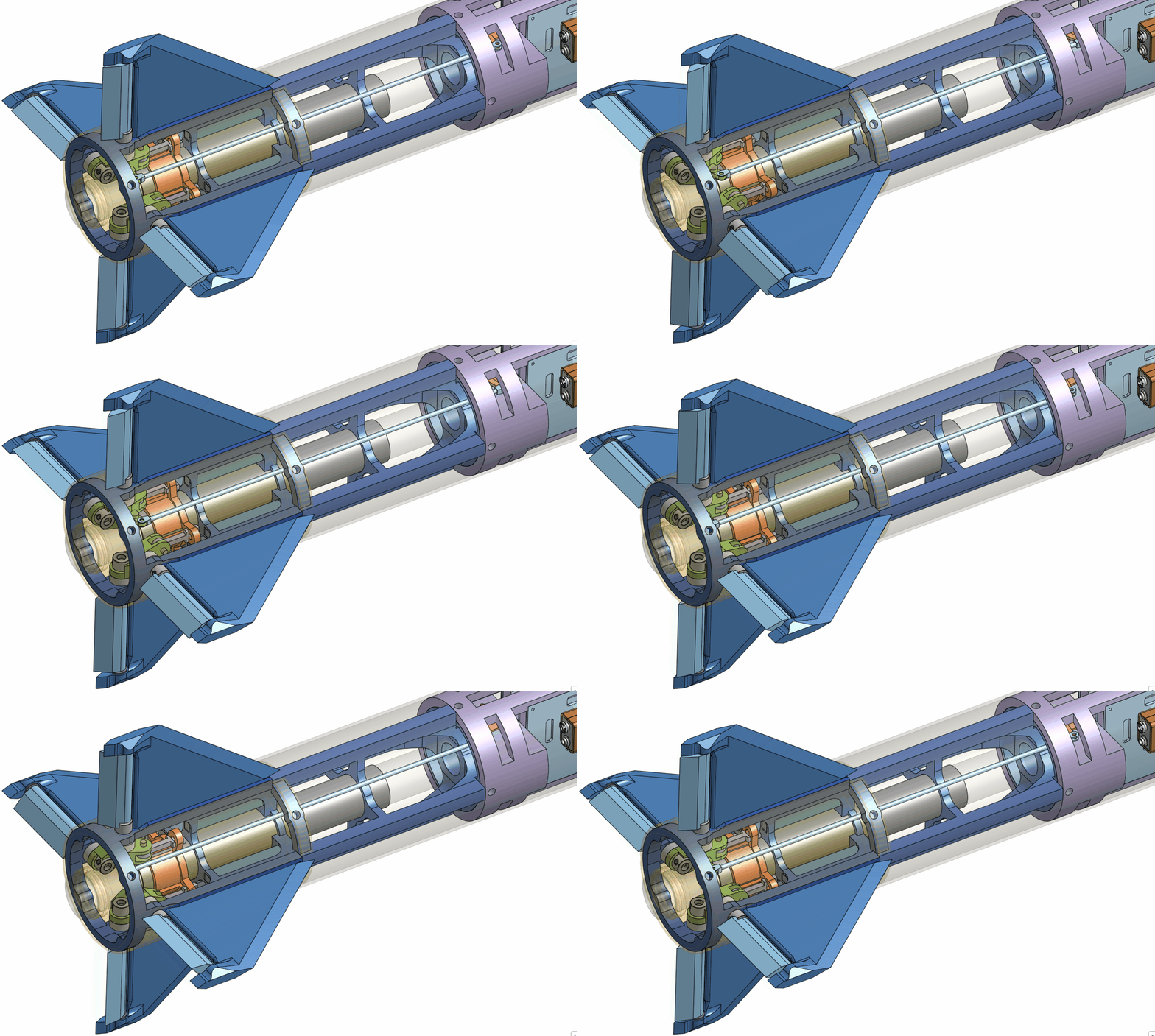
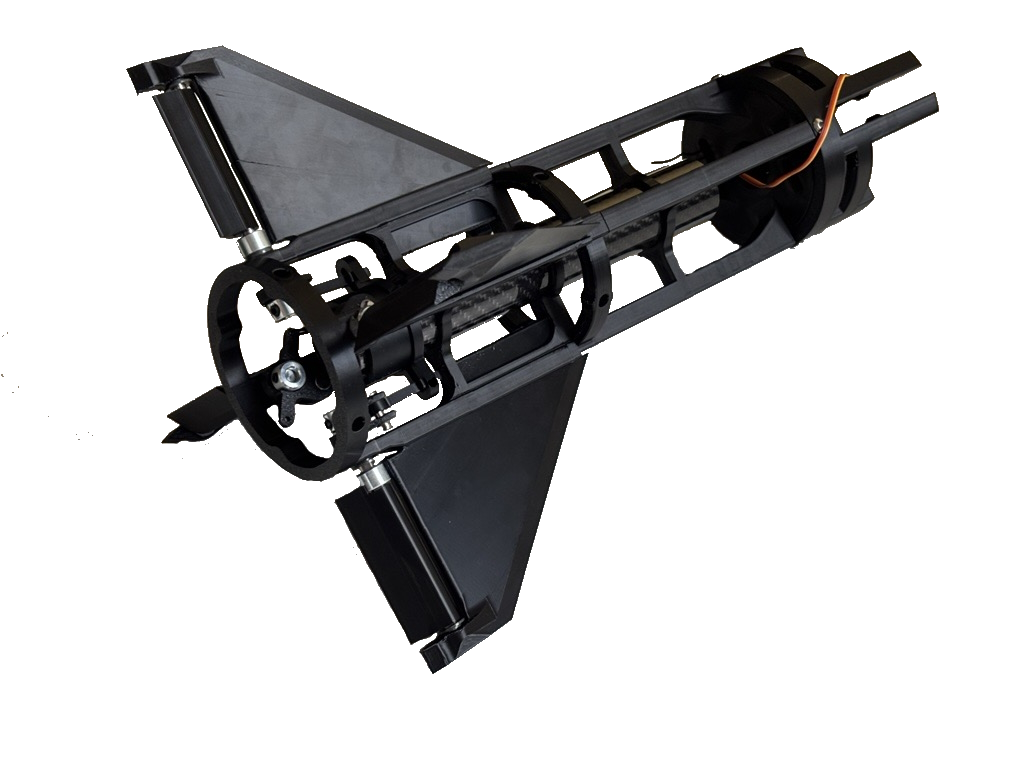
Linked aileron mechanism that ensures Harolld is only controllable in the roll axis.
Flight Computer Design & Assembly
Caroll is a Teensy 4.1-based flight computer serving the primary purpose of hosting and actioning the control system. It uses a BNO055 and BMP280 for state detection and stores flight data to a μSD card to match the reader that comes with the Teensy 4.1. Caroll is intentionally designed to be as simple as possible to allow for easy implementation of our control system without a steep learning curve, while also providing a suitable introduction to flight computer design, including:
- ECAD in KiCad
- Flight code in Arduino
- Protoboard assembly
- Sensor Fusion
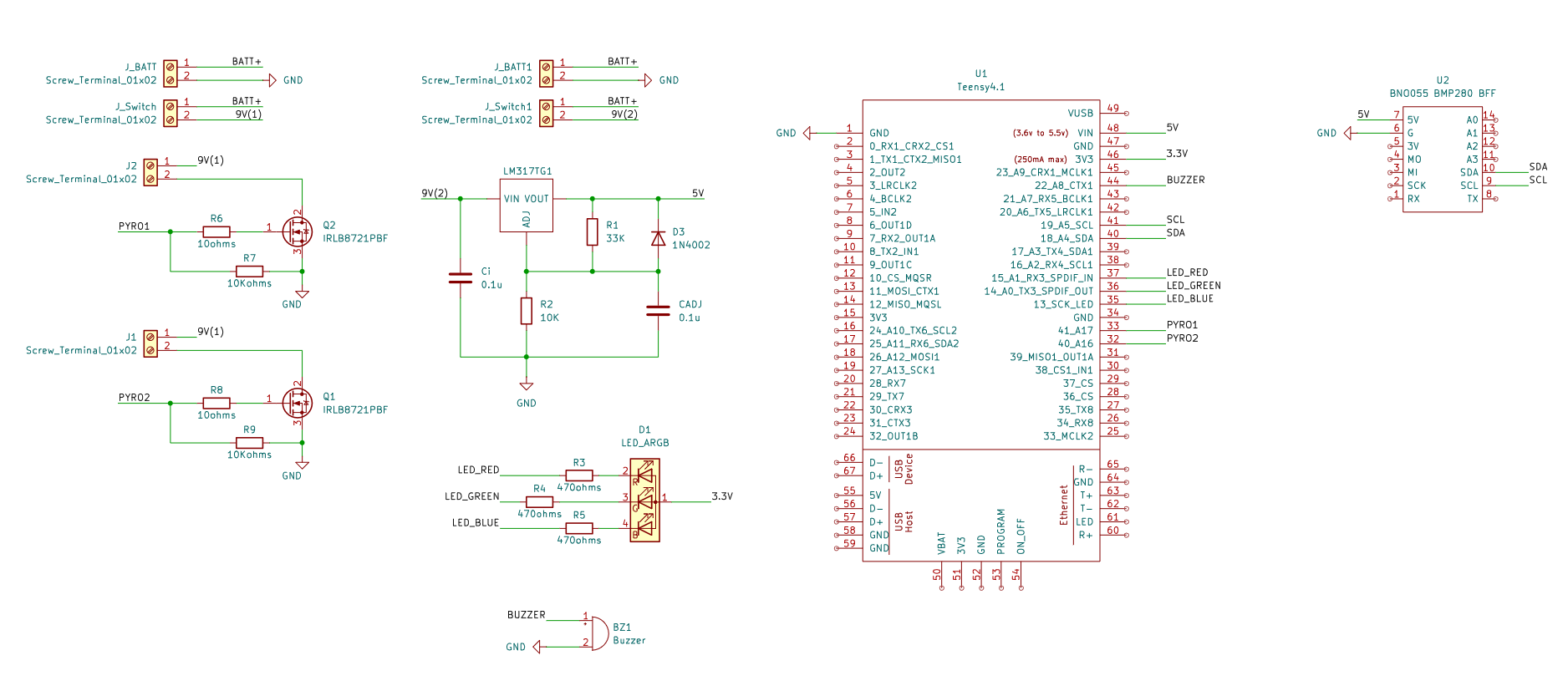
ECAD Schematic of Caroll drawn up in KiCad.
Control System for Roll Control
The roll control system is a PID-based system that is initially being tuned by a Simulink model and later will be tuned by flight testing. After working with PINN-based Model Predictive Control for the airbrakes on board competition rockets, we want to see how far a traditional PID approach could go for aerodynamic control. The Simulink model is a 2DoF trajectory simulator that uses the Barrowman Equations of roll dynamics to simulate the roll chracteristics with high fidelity, while almost ignoring all other dynamics of flight.
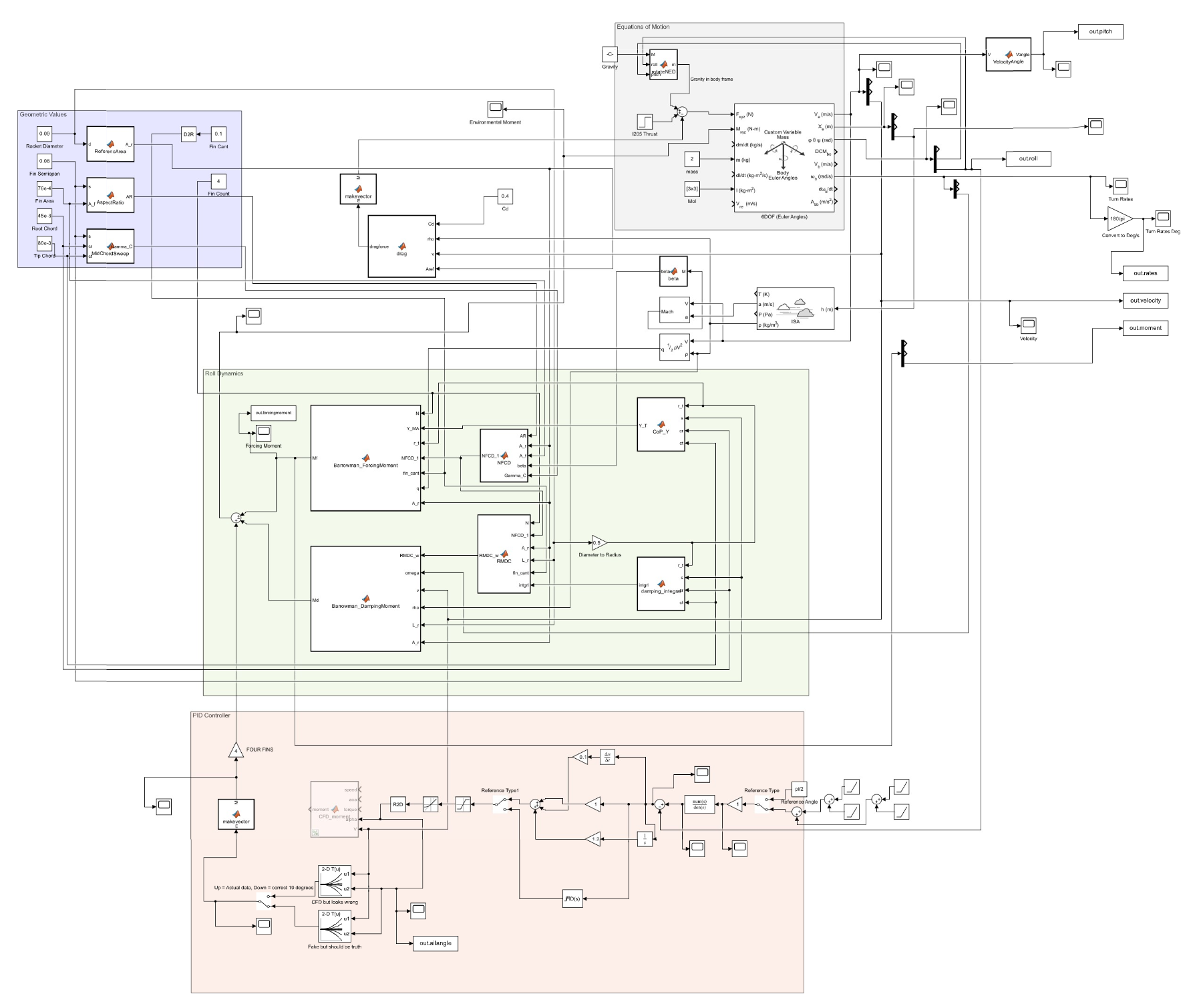
Simulink model used for roll dynamics simulation.
Harolld and Caroll are currently WIP projects, but we are aiming for a first launch at the end of September with the Victorian Rocketry Association. Despite this, I am already appreciating the skills and perspective this project has given me as a smaller-scope aerospace engineering project. It has also been very helpful in gauging topics and measuring the scope for my masters capstone project. It is exciting and challenging in its own way to work on a project entirely self-motivated.